Sunday, 31 October 2010

Self Assessment and Area Choice

I’m uncertain about which area to take up: 3D and spatial design or visual communication. I enjoyed these the most and can also imagine myself excelling at either in the future.
Although 3D is an area I have only just been introduced to in foundation I showed interest in learning how to ‘think 3D’ and wanted to create innovative, modern designs. In the fashion rotation I improved upon transferring my drawings into models; and in fine art I enjoyed producing sculptural pieces.
I would choose visual communication because I worked well with creating a visual narrative. Book design is something I’d like to look in to - I developed the narrative by putting it into the form of a book and over the course of the rotation have made sketchbooks with love and care. I realise that visual communication is a broad area; I would love to use the time I have to further explore photography, illustration and animation. I know that I’d be good at and enjoy these processes.
Of course, life is a learning curve and I did struggle with elements of the areas along the way. In 3D I struggled at first with the manipulation of paper to create what I saw in my mind. It helped that I could use the time given to me in both fashion and 3D to teach myself how to do this. In visual communication it was a challenge to communicate a message without the use of language. Despite the difficulty, I enjoyed the challenge as the tutors encouraged us to problem-solve with our peers. It was comforting to know that others would help me along the way.
The critique days were positive for both areas. ‘Positive’ to me means that I have learnt something from the comments; not just that I received praise. In 3D I had a wealth of resources to learn from and inspire me which resonated into my sketches/designs and through to my models. I did learn that I had to develop my designs further in some cases as this would create a more visually interesting outcome. In visual communication I realised the importance of understanding your audience and of their feedback - this really helped in knowing how to achieve the intended reading.
The five most successful pieces from all the rotations were the bobble chair from 3D; the illustrations of hair and wool from fashion; the structure made from straws from fine art; the plastic concertina necklace from fashion; and the narrative from visual communication. I think they are successful because they either showed a good connection and development from the sketchbook; are visually impressive; or others have actually reacted to. For instance a few people claimed they’d buy the bobble chair if it was a real product or wear the concertina necklace; and others have wanted to look closer at the straw structure and claimed how interesting and fun they thought it was.
I have many ambitions; to be an interior designer, a photographer, illustrator, furniture designer, graphic designer, book designer. I hope that whichever path I take I will be able to incorporate elements of these in to my projects. I feel these professions fit into both 3D and visual communication and wish I didn’t have to choose between them really!

Thursday, 21 October 2010

Vis Com - Narrative


An overwhelming start: - Too much of a wealth of images. 


Having struggled to begin the project based on creating a narrative, I forced myself to decide on a topic. "Unsettling matters on the domestic front". I then wittled my research papers down to four piles - girls - boys - backgrounds - materials. This really helped and I learnt that I should have done this a lot earlier in the day (everyone else brought in only 13 found images).

I created a narrative based on the one Bex Lui and I had made the previous day.

You read the images left to right like you would a book. 1. Woman is upset that her partner overworks and feels distant from him. 2. She misses him; yearns to see him, touch him; tosses and turns in her sleep through anxiety 3. She finds that he has been unfaithful in the time spent away from her. Her heart is stops as it has been broken. She now doubts any previous hope of marriage. 4. The relationship breaks down. Trust is lost. She feels trapped. 5. She splits up with him. She is now accompanied by the empty space that he once filled. 6. She now sleeps depressed and alone. There is a hole in heart now that symbolises the inabilty to love another fully (because she has now been betrayed).

Monday, 18 October 2010

First week of Vis Com

Here's one preferred piece from my sketchbook that I produced having been given the word 'String' to work on.


Bex Lui and I were grouped together and were asked to produce something that is a development on the words 'Box' and 'String' - the words we'd been working on separately earlier.

Ideas came and went on how to best apporach the task. In the end, we settled on the idea of marriage and feeling tied up and boxed in. 

We created a narrative where the relationship starts off well and then disintegrates.

Friday, 15 October 2010

Fine Art - Mammaries, penises, vaginas!

I took the second half of the fine art rotation as a chance to have some childish fun.
In the first half I made a few animations and drawings based on the in-studio installations.
I'd begun to draw circluar shapes with colourful felt tip pens based on the pebbles, cakes and balloons in the installation. I decided to carry through the circular element and the bursts of colour into my later work. I began with the theme of private parts whilst playing with balloons inserted into holes in paper. I realised that the balloons underside looked like a breast. And so, the project grew.
The balloon-breasts got quite a few laughs.

My Collection of Private Parts

Where all of my work stemmed from.

"Plastic Penis" 
Having been inspired by the colourful circles, I began work with straws. It all began with filling a circular plane with the sliced straws; which thereafter grew upwards and outwards. When hung on the wall, this piece resembles an erect penis.

Fake Bossoms (2 Pink Balloons inserted into paper)

Eye Candy

I found it impossible to blow this balloon up; hence I have called it "Erectile Disfunction".

Look closely at this abstract piece and find breasts, vaginas and a penis.
(Ink and paint)

A sprinkle of humour.


My work relates to:-

Tom Freidman: "Yarn Dog"


Turner Prize Winner 2001, Martin Creed.


I looked at this artist at the beginning of the rotation (see earlier posts) and also at Keith Tyson. Both artists cram objects together to make sculptures. This connects to my piece "Plastic Penis".

Thursday, 14 October 2010

Rachel Whiteread Exhibition @ Tate Britain

I loved Rachel Whiteread's use of Tippex. This is a material that I have been experimenting with in my work. I liked seeing how other people (ie. her!) used it.


I found a few artists who Whiteread's work relates to:

Donald JUDD
1928-1994. 
Untitled (Six boxes), 1974


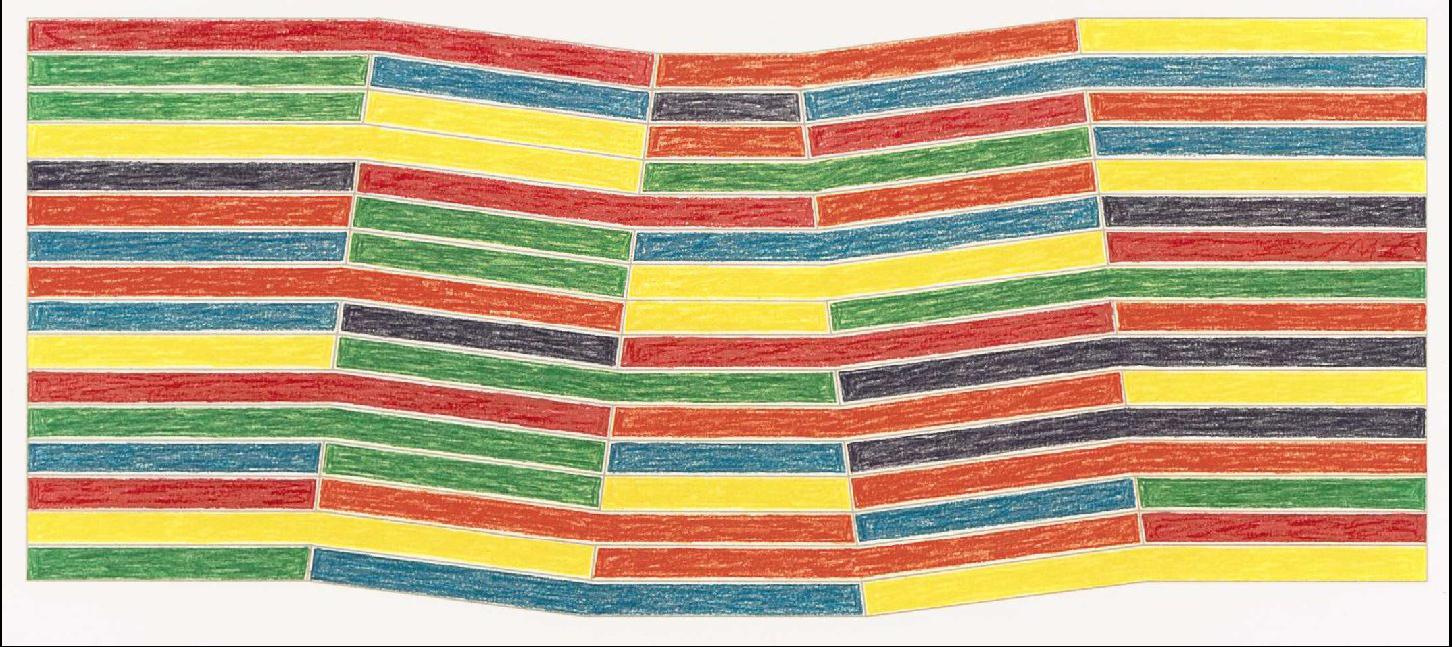
Frank STELLA,
1936 - Now
Sabine Pass, 1971

Wednesday, 13 October 2010

I'd love to be able to draw like this.


His drawings are strange, detailed and surreal. I've seen artists (I can't actually name any - thanks, Brain) combining human forms with animal forms before and I find it so peculiar as it's like nothing you've seen before on earth - and yet the separate components of the subject are so familiar.

Below you can see that I've posted the merchandise that Hillier's art has been printed on to. This reminded me of how Takashi Murakami merged commerce and art.


Sunday, 10 October 2010

Takashi Murakami: Art or Design?

Having watched Art Safari: 'Toying with Art' I learnt that Takashi Murakami that he was both an artist and a designer because he made art which was then sold as a mass produced product. For example he would make 'sculptures' which would be downsized and sold as 'toys'. One thing that struck me was that he had skilled workers making the art for him. This makes me class him more as a designer in this way. I feel that he is a designer especially after having read Joshua Porter's 'Social Design' in which Andy Miller comments "genuinely honest art is created without the market in mind....Design is created with the market in mind...[if you're] purposefully crafting your work in order to sell, you’ve become a designer". Murakami seems to know his target market well and has designed his art and designs around their interests. Hence why his toys sell so well. Meanwhile art collectors and critics think that he is the new Andy Warhol. However, Jeff Howe from www.wired.com argues that Warhol did not appeal to both the low and high cultures like Murakami does. Whereas Andy Warhol's paintings were unaffordable and his films were hard to decipher, Murakami hits all price points and happy imagery appeals to many.

RESEARCH -

Wikipedia says:-
Takashi Murakami is a prolific contemporary Japanese artist who works in both fine arts media, such as painting, as well as digital and commercial media. He blurs the boundaries between high and low art. He appropriates popular themes from mass media and pop culture, then turns them into thirty-foot sculptures, "Superflat" paintings, or marketable commercial goods such as figurines or phone caddies.


Quotes from an interview with Mr Murakami:-
 

You are here today as a designer, how did you as an artist, become involved in the design world?


I have a long relationship with design, a good example is my collaboration with Louis Vuitton. However this is the first time I‘ve made a public presentation at a design fair and Design Miami is a very good place to present my pieces but for me the background is the same. In the Western world there is a clear division between Art and Design but in Japan they are the same, it's part of Japanese philosophy.


*Superflat is a postmodern art movement, founded by the artist Takashi Murakami, which is influenced by manga and anime. The term is used by Murakami to refer to various flattened forms in Japanese graphic art, animation, pop culture and fine arts, as well as the "shallow emptiness of Japanese consumer culture."


*Otaku is a Japanese slang word which means someone who is obsessed with something, especially anime and manga. The term "otaku" being used as very knowledgeable geek, obsessed with anime, extreme fan of anime and manga.

Tuesday, 5 October 2010

Information Overload


Full image (left) and Detail (right)

In an earlier post about the brief, I said that my brain was a landfill of images.

This piece is by Gonkar Gyatso (a London-based artist). The work collages small stickers of of branding logos, typography, and recognizable cartoon characters to create images of the Buddha.

It illustrates quite well the idea of having a head full of visual information.

Monday, 4 October 2010

Animation prep-research for Thursday

On Thursday we'll be making an animation in an acetate flipbook.
Here are some cool animations I've found on www.colectiva.tv.


Firekites - AUTUMN STORY - chalk animation from Lucinda Schreiber on Vimeo.

Thinking ahead.

I keep finding images I like that don't necessarily link to the Fine Art rotation's theme of Epic Tour. So I've had a sneaky peek at the project for Visual Communication . I found this Singaporean designer's work on www.designfolio.com and thought it might be good to look at for the titles 'You don’t see that every day' or 'People do odd things'. The one below is quite humourous.


HOWEVER. 

This installation piece by the same designer reminded me of the Summer Project: 'Where I'm Coming From'.

Especially if you read this extract from the site:  


This installation is called 'I fly like paper get high like planes' - the title of one of M.I.A.'s songs.

Experimental Typography

For the past four weeks in 3D Spatial and Fashion Textiles, we've been asked to first make 2d drawings and then develop these into 3d models.

Here are some interesting ways I've found to turn 2D typography into a 3D "structure".

The rope typography is something I could have experimented with in Fashion Textiles as I was looking into the concept of 'Bulk'.

The modular origami typography is one I could have looked into in 3D Spatial as we were looking into using modules.

Maybe I could experiment with typography in VisCom as I suppose it applies more to that area? We'll see.


HandMadeFont


Ersinhan Ersin


Sunday, 3 October 2010

Fine Art Rotation Brief

THE BRIEF:

What’s happening with today’s cultural identity? Like a piece of collage, everything is mixed up.
It’s all coming at you. We are all bombarded with imagery.
Images taken; When, moving in and around our urban environment. Bill board hoardings. Yesterday’s newspapers, magazines, television, etc., are far from ‘gone’ or ‘past’. They exist as facts as well as objects, although the events to which they refer may well have passed.
In a collective sense they remain of our time, all being equally present.
Through ‘high’ and ‘low’ culture, films, magazines, tabloid papers, literature, the Internet and so on, we are given reminders of the past as well as images of the present and perhaps clues to the future. The unplanned and the unexpected juxtaposition of such culturally varied images is, for everyone, a daily experience.
Artists have always described their position in relation to their own times. Knowingly or not they have acted as ciphers, drawing on and reflecting upon their immediate surroundings and experiences.

RESEARCH:
I've edited my research down to a few items in which the artists show pieces that have a wealth of subjects within them.


LOVE THIS!!! (below)


LOVE THIS!!! (below)


LOVE THIS!!! (below)


These images were chosen because, to me, the way they use so many objects combined into one illustrates the idea of image-bombardment. I've seen so many images in my life time. We all have such a wealth of images . But for me they have all become a jumble in my head. My brain doesn't quite know what to do with the overload of information! I picture a landfill of images in my brain that looks similar to Keith Tyson's 'Globe of Shit'. The images in this landfill are not necessarily classed as 'shit', but I suppose the way my brain has decided to throw them onto this pile says something. Not everything goes to the pit though - I know that many, many images remain vivid in my mind. These have their own neat, organised (though usually unlabelled), easily accessible part in my brain.

Friday, 1 October 2010

The End of Fashion & Textiles


Well, that's all over now. Quite enjoyed it.

The 'Crit' today was very chilled which was lovely. I now know not to panic about Crit days!

I had a think about what my strengths were in this rotation....
  • Use of my sketchbook// I used a variety of media and cut/fold techniques in my sketchbooks. My concept was influenced by the first drawings I did. The concept follows through the drawings in all 3 of my sketchbooks.
  • Use of research// Because I found a concept early on I could collect necessary and relative  research to inspire me. You can see the connection between my research and my models.
  • Use of 2d drawings into 3d models// One day when I was at home and didn't feel like making a model, I did a few illustrations. I used photocopies of these to make models later on.

What I've learnt from this rotation....
  • That my preconceptions of what constitutes Fashion Textiles were wrong - it's much more process based rather than going straight into designing products/garments. 
  • It's quite a bit like 3D as you're experimenting with materials to make small models.
  • That it's important to come up with a concept early on and stick to it for the best results.
  • That I can incorporate other interests into the area; ie. I made a few models from my illustrations of hair.